Why Your Birth Chart is Your Life’s GPS
Welcome to the definitive natal chart guide. If you’ve ever felt lost, confused about your purpose, or wondered why certain patterns keep repeating in your life, the answer isn’t in a crystal ball—it’s in your natal chart.
Your birth chart (also commonly called your astro chart or astrology chart) is far more than just a snapshot of the sky at the moment you were born; it is your personal cosmic blueprint. It maps the positions of the Sun, Moon, and all the planets in the 12 signs of the Zodiac and the 12 Houses of life. This complex, elegant map is a precise, time-coded instruction manual for your soul.
Unlike a generic horoscope which uses only your Sun sign, a deep dive into your natal chart provides the context—the why and how—behind your core personality, emotional needs, career drives, and relationship patterns. If you’re searching for “how to read my birth chart,” this definitive guide is your starting point.
Here at Planet Whispers, we believe your astrology chart is the most powerful tool for self-awareness. By understanding this map, you move from passively receiving life to actively aligning with your destiny.
1. Defining the Blueprint: What Exactly is an Astrology Chart?
A birth chart is a two-dimensional diagram that plots the precise placement of the celestial bodies from the unique perspective of your place of birth on Earth.
To generate an accurate natal chart, three pieces of information are non-negotiable:
Date of Birth: Determines the position of the Sun and the slower-moving outer planets.
Time of Birth: The most crucial element, as it determines the Rising Sign (Ascendant) and the precise placement of the 12 Houses. Without an accurate time, your entire astro chart structure is skewed.
Place of Birth: Determines the exact geographical coordinates needed to calculate the Ascendant and Midheaven.
Every single point in this map—from the fierce planet Mars to the reflective Moon—represents an energetic force shaping your character. Understanding these points transforms your reading of a simple horoscope from generalized advice into tailored wisdom.
The Three Cornerstones of Every Birth Chart
When learning to read your astrology chart, you must first master the meaning of these three main components:
A. The Planets (The ‘What’)
Understanding these three pillars is the foundation of this natal chart guide.
The planets are the actors in your natal chart. They represent the energy or psychological drive that motivates you.
Sun: Your conscious ego, willpower, and core identity.
Moon: Your emotional self, needs, security, and intuition.
Mercury: How you think, communicate, and process information.
Venus: How you relate to others, what you value, and your approach to love and money.
Mars: Your drive, aggression, motivation, and physical energy.
Jupiter: Where you experience growth, expansion, and luck.
Saturn: Where you face challenges, build discipline, and learn maturity.
Uranus: The planet of revolution, sudden change, and awakening. Where it sits in your astro chart shows where you resist authority.
Neptune: The planet of dreams, illusion, spirituality, and dissolution. It represents where you seek transcendence or confusion.
Pluto: The planet of transformation, power, death, and rebirth. It highlights the areas of your life that undergo profound, cyclical change.
B. The Signs (The ‘How’)
The Zodiac Signs (Aries, Taurus, Gemini, etc.) are the style or flavor that colors the planetary energy. Every planet in your astro chart is placed in a sign.
If Mars is in Aries, your drive (Mars) is direct, forceful, and competitive (Aries).
If Mars is in Libra, your drive (Mars) is diplomatic, balanced, and relationship-focused (Libra).
This distinction is what makes every natal chart unique, even between people born on the same day.
C. The Houses (The ‘Where’)
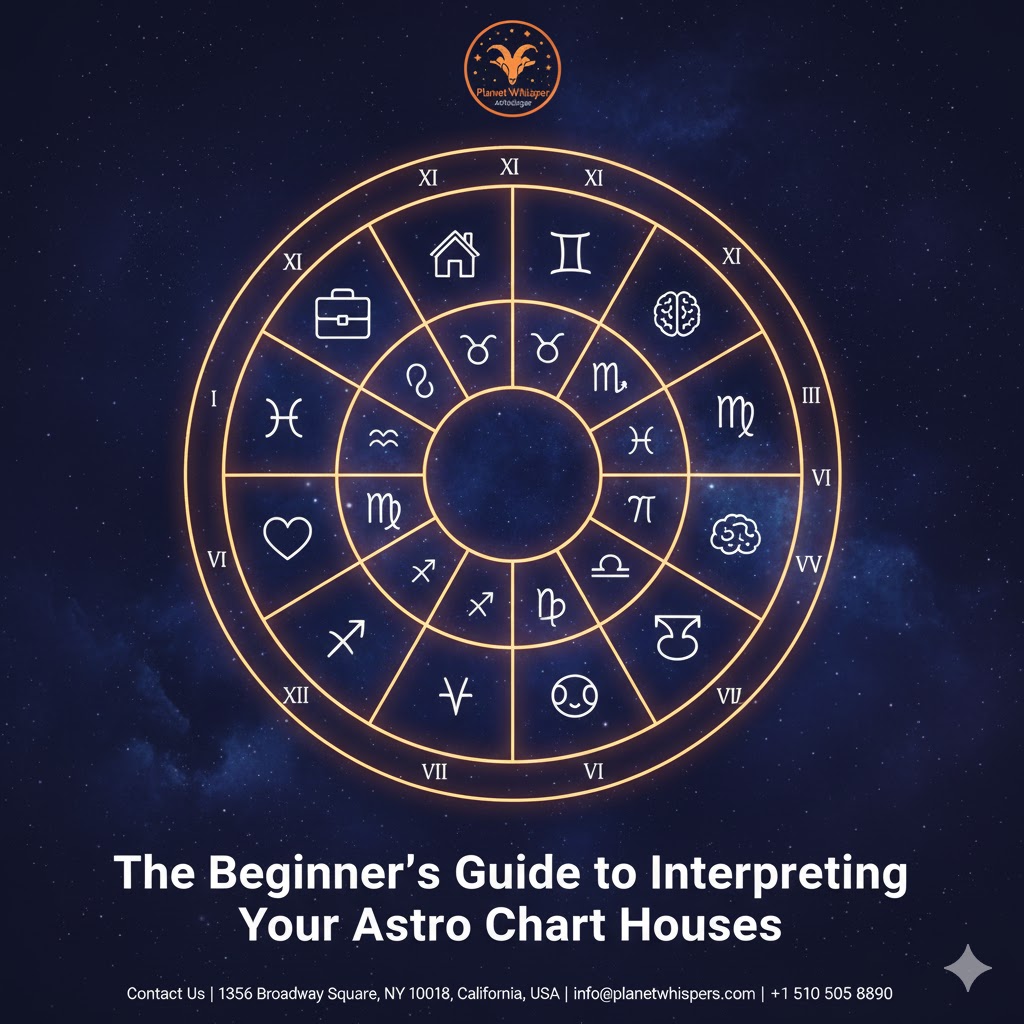
The 12 Houses are the areas of life where the planetary energy is expressed. They are the stage upon which your life plays out.
1st House (Self): Personality, appearance.
2nd House (Value): Money, possessions, self-worth.
7th House (Partnership): Marriage, committed relationships.
10th House (Career): Reputation, public life, life purpose.
The placement of the planets in these houses dictates where your life’s greatest focus and activity will occur. A birth chart reading that ignores the houses is missing 90% of the picture.
2. Going Deeper: Understanding the Angles of Your Astro Chart
To truly understand your astrology chart, you need to look at the sensitive points that govern the structure of your life.
The Ascendant (Rising Sign) and the Midheaven
These two points are essential for correctly interpreting your natal chart and predicting your future:
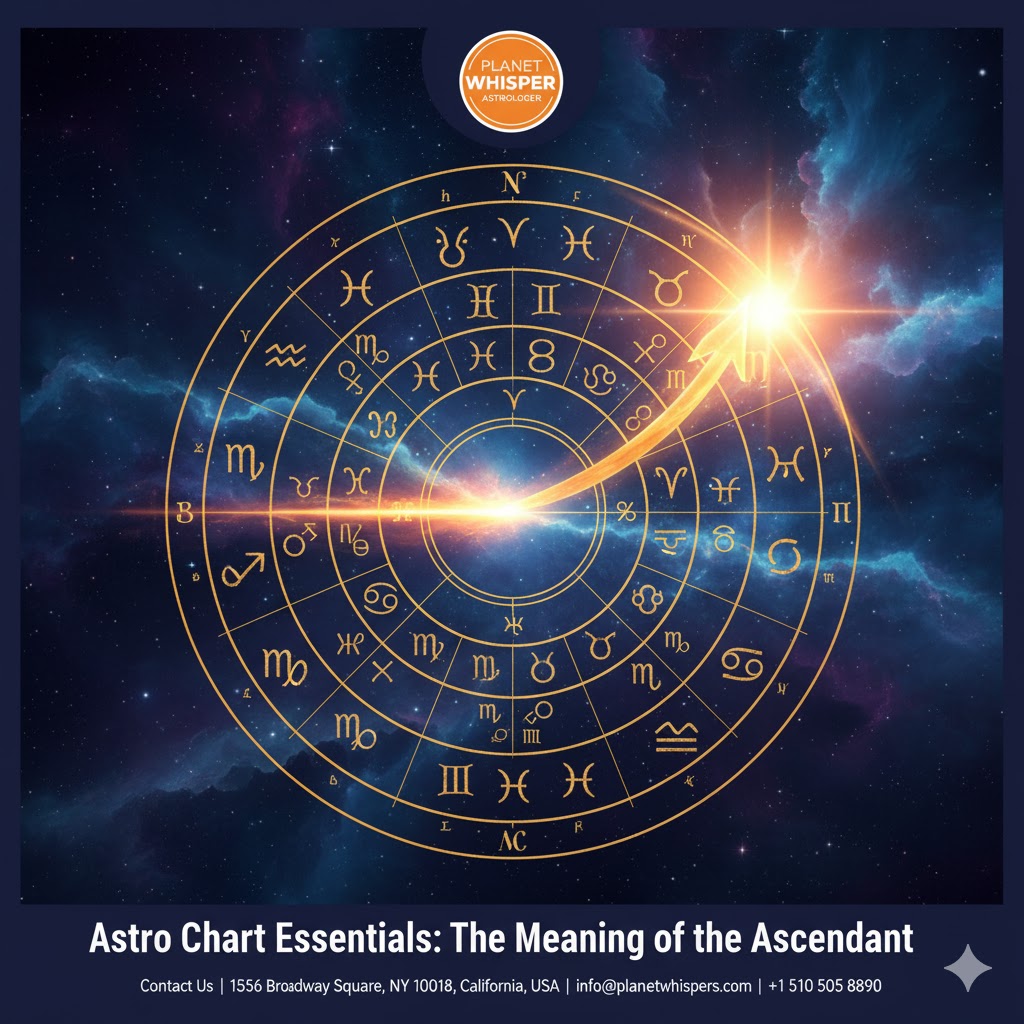
The Ascendant (ASC): This is the sign rising over the eastern horizon at your exact birth time. It is your most immediate interface with the world—the mask you show, your first impressions, and your physical body. For accurate daily horoscope predictions, you should always read for your Rising Sign first, as it dictates where the houses begin.
The Midheaven (MC): This is the highest point in your astro chart. It governs your public reputation, ambition, career path, and ultimate contribution to the world. A consultation focused on career will heavily analyze your Midheaven placement.
Aspects: The Conversation Between Planets
The lines drawn inside the circular birth chart are called aspects. They show the precise angular distance between planets, indicating how those energies “talk” to each other. Understanding these connections is key to seeing the synergy within my birth chart.
Conjunctions (0 degrees): The two energies blend together strongly. This creates intense, focused energy in your natal chart.
Squares (90 degrees): The energies clash, creating friction, tension, and challenging growth. This often highlights areas in your natal chart that require conscious effort and willpower.
Oppositions (180 degrees): The energies pull in two opposite directions, often manifesting in relationships or conflicts that require balancing.
Trines (120 degrees): The energies flow easily and harmoniously, indicating natural talents or luck. These are the gifts in your astrology chart.
Sextiles (60 degrees): Offer opportunities for easy growth, though conscious effort is required to activate them.
3. The Karmic Roadmap: The North Node, South Node, and Your Soul’s Purpose
Beyond the planets, signs, and houses, every complete natal chart analysis must include the karmic points. These are the most compelling parts of the map when seeking clarity on your life direction.
The North Node: Your Destiny Point
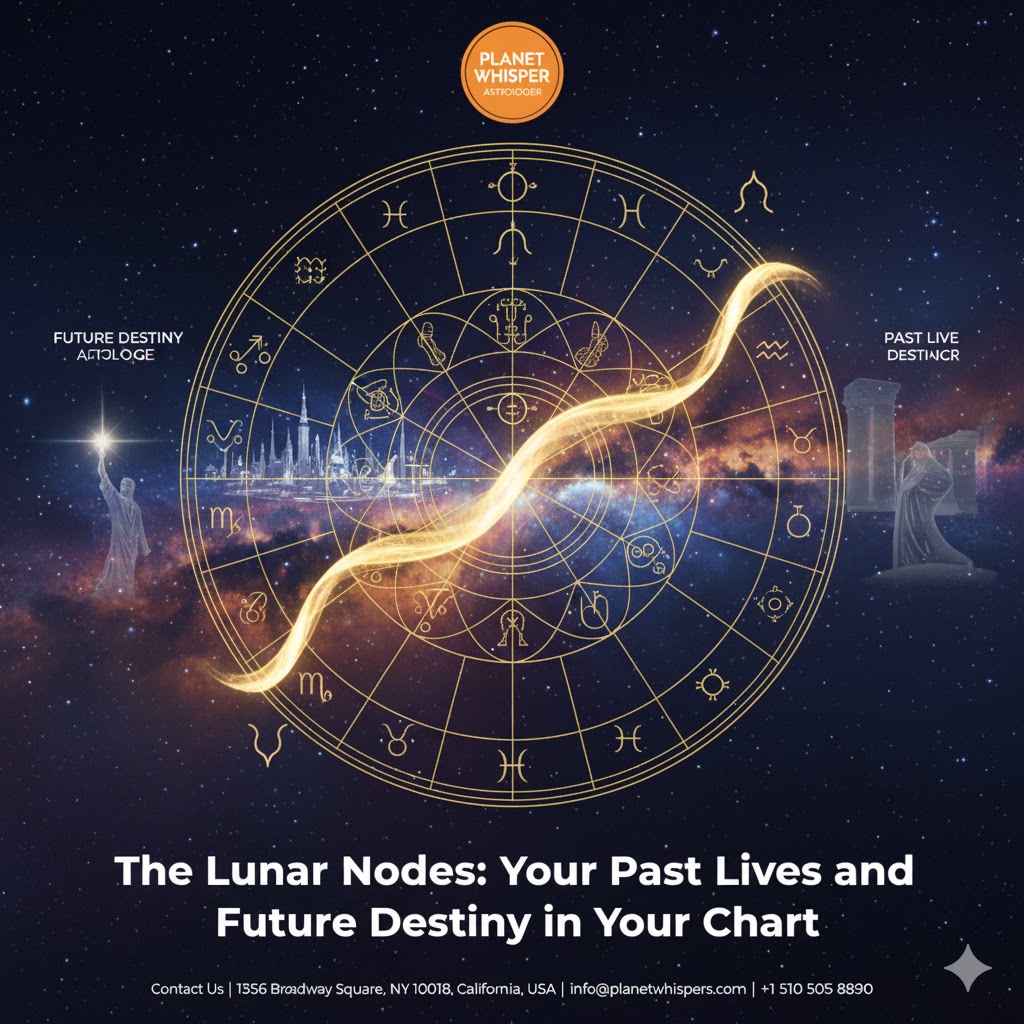
The North Node is a calculated point (not a physical body) that shows the direction your soul is meant to grow toward in this lifetime. It represents your destiny, your challenge, and your ultimate fulfillment.
North Node in Sign: Describes the style of energy you must cultivate. For example, North Node in Taurus means cultivating patience, material security, and simplicity.
North Node in House: Describes the area of life where you will find your greatest fulfillment. North Node in the 10th House points toward a destiny found in public life or career mastery.
If you are looking at my natal chart and struggling with feelings of stagnation, focusing on the sign and house of your North Node will provide immediate clarity and purpose.
The South Node: Your Comfort Zone
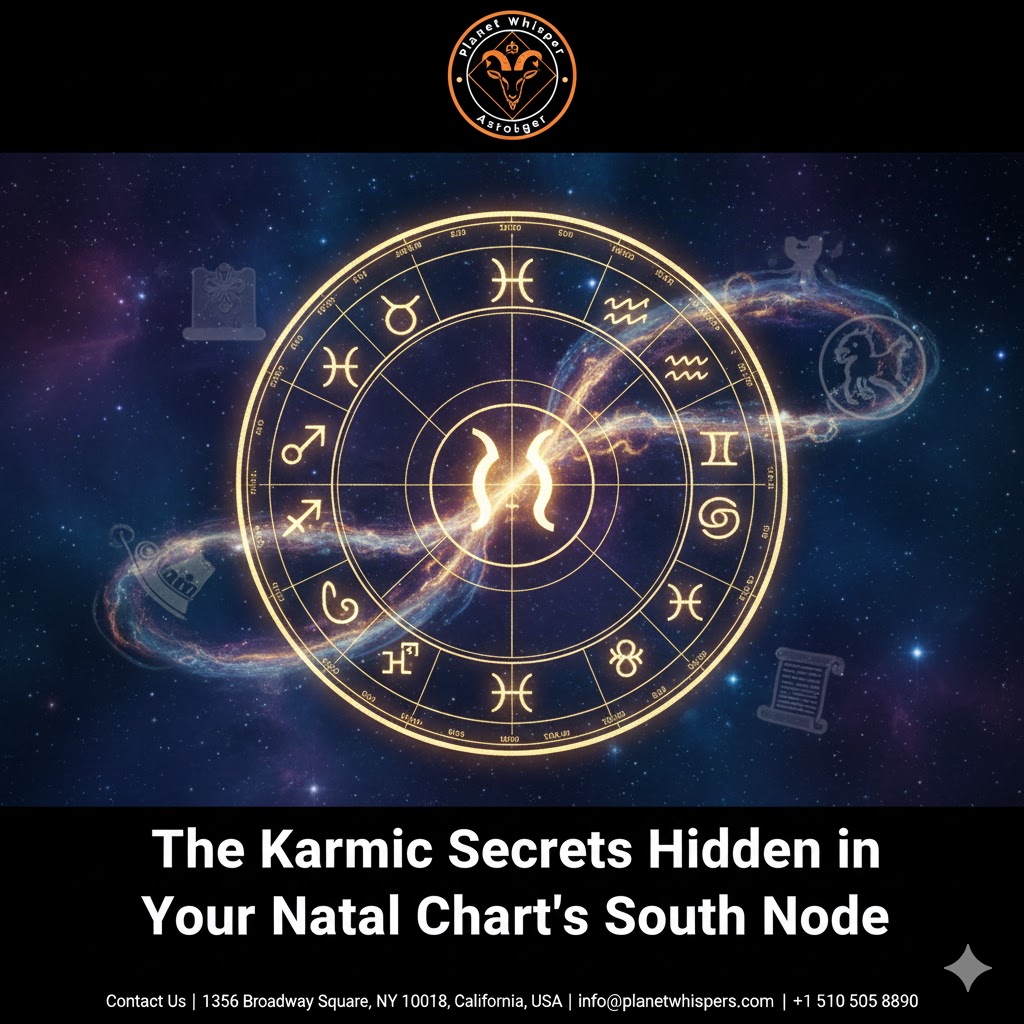
Directly opposite the North Node is the South Node, representing your past-life skills, inherited talents, and emotional comfort zone. While these traits are easy for you, relying on them too heavily leads to stagnation.
The core lesson of your astro chart is to move away from the South Node’s comfort and courageously embrace the North Node’s challenge. This axis explains many lifelong emotional patterns and resistance points.
4. Advanced Chart Points and Techniques (Bridging to Expertise)
A truly comprehensive birth chart reading goes beyond the basics to incorporate the subtle, yet powerful, energies of minor planets and specialized techniques.
Chiron and the Wounded Healer
Chiron is a comet-like asteroid that sits between Saturn and Uranus. In your natal chart, Chiron’s sign and house reveal your deepest wound—often one inherited or experienced early in life. Critically, it also shows where you have the power to heal others through the very wound you carry. This concept, known as the Wounded Healer, is a powerful lens through which to view your life purpose and career path.
The Part of Fortune
The Part of Fortune is a calculated point that symbolizes where you find material and emotional happiness or “luck” when you are following the path of your Sun, Moon, and Ascendant. It shows the area of life where flow and ease naturally manifest in your birth chart.
An Introduction to Different Chart Systems: Western vs. Vedic
While this guide focuses primarily on Western astrology chart analysis (using the Tropical Zodiac), it is important to acknowledge other schools of thought:
Vedic Astrology (Jyotish): This system uses the Sidereal Zodiac, which aligns with the actual position of the constellations in the sky. If you generate a vedic astrology birth chart, you will find your planets are placed in different signs, offering a different, often more fate-focused, perspective on your life path. Understanding this difference is key for anyone exploring the depth of my birth chart.
House Systems: Different astrologers use different methods (Placidus, Whole Sign, Koch) to divide the 12 Houses in the natal chart. While the differences are technical, they can shift the interpretation of a house cusp significantly, particularly for professional birth chart reading astrologer services.
5. From Static Map to Dynamic Life: Transits and Compatibility
Your natal chart is a static map, but life is dynamic. Astrology allows us to track the current movement of the planets and overlay them onto your static map, turning a historical document into a predictive tool.
Transits and Your Daily Horoscope
Transits are the way we forecast your daily horoscope. A transit occurs when a currently moving planet (e.g., the Moon) aligns or aspects a planet in your fixed birth chart.
Inner Planet Transits (Moon, Mercury, Venus, Mars): These are fast-moving and influence your daily horoscope with subtle shifts in mood, communication, and energy.
Outer Planet Transits (Jupiter, Saturn, Uranus, Neptune, Pluto): These are slow-moving and mark multi-year periods of major life change, transformation, and structural evolution in your natal chart—for example, the Saturn Return.
Understanding transits is critical for accurate horoscope chart reading and is the mechanism by which astrology becomes actionable life timing.
Synastry: Compatibility in the Astrology Chart
When two people connect, their charts interact in a technique called Synastry. We look at how the planets in one person’s astro chart aspect the planets in the other’s.
Harmonious Aspects (Trines/Sextiles): Show areas of easy connection, support, and mutual enjoyment (e.g., your Moon trine their Venus).
Challenging Aspects (Squares/Oppositions): Show areas of friction, intense attraction, and necessary growth (e.g., your Mars square their Mars).
Synastry answers questions related to birth chart love compatibility and explains why some relationships flow effortlessly while others require tremendous effort. Analyzing these dynamics provides depth far beyond generalized zodiac sign compatibility.
6. The Value of Professional Birth Chart Reading Astrologer Services
While this guide empowers you to begin interpreting your my natal chart, the complexity of weaving together 10 planets, 12 signs, 12 houses, 4 angles, and 5 major aspects is overwhelming. This is where professional expertise comes in.
Why a Paid Consultation is Worth the Investment
Free birth chart analysis tools and automated reports are excellent starting points for getting the basic placements of your Sun, Moon, and Rising. However, they lack the synthesis required for true understanding.
A professional birth chart reading astrologer does three things that automated reports cannot:
Prioritize: They identify the most dominant, critical placements in your astro chart—often a strong Jupiter/Saturn conjunction or a powerful stellium—and focus the reading on these life-defining themes.
Synthesize: They weave together seemingly contradictory elements (e.g., a shy Cancer Sun with an assertive Aries Moon) into a cohesive, understandable personality profile.
Timing & Strategy: They provide actionable timing predictions using transits, answering crucial questions like, “When is the best time to start my business?” or “When will this relationship challenge pass?”
If you are looking for a horoscope chart reading that provides depth, strategy, and personalized counsel, booking a session with a qualified expert is essential.
What to Bring to Your Professional Reading
To get the most value from your birth chart reading astrologer, ensure you have two things prepared:
Accurate Data: Your exact birth time, date, and location. If the time is unknown, ask the astrologer about Chart Rectification—a technique used to determine an accurate birth time.
Specific Questions: Don’t just ask, “What is my destiny?” Ask questions about specific areas of your life governed by the houses: “How does my 10th House placement affect my career change?” or “Why does my 7th House indicate a need for intense partnership?”
Your Natal Chart is Ready to Be Read
Your natal chart is a map of your soul’s potential, written in the language of the cosmos. Every planet, sign, and house is a component of your unique self. By understanding this map, you unlock the ability to align your free will with your destiny.
We encourage you to start your journey today.
Resources for Further Exploration
Get Your Free Chart: Use our easy-to-use tool to generate my birth chart instantly and begin your free birth chart analysis (Link to /free-birth-chart-calculator/).
Learn the Basics: Read our deep-dive guides on the “12 Houses Explained” and “The True Meaning of Your North Node
Book Your Expert Analysis: Ready for a personalized, strategic analysis of your astro chart? Book a birth chart reading astrologer consultation now to get clarity on your life path